
Top Medium Voltage Switchgear Choices: Ranking Indoor Metal-Clad and RMU Solutions
Top Medium Voltage Switchgear Choices: Ranking Indoor Metal-Clad and RMU Solutions
Choosing medium voltage switchgear at the decision stage is a matching exercise, not a popularity test. The five options ranked below — KYN28-12, KYN28-24, the XGN15-12 SF6 ring main unit, the XGN15-24 RMU and the YBW-12 prefabricated substation — are judged on four product criteria (rated voltage, current range, insulation type and enclosure material) and one project criterion: how much room, civil work and schedule each option demands. Every model reference, material and rating in this ranking comes from the published range of Changzhou Tuoxin Electric Co., Ltd., a switchgear manufacturer based in Xixiang Industrial Park, Hengshanqiao, Changzhou, China.
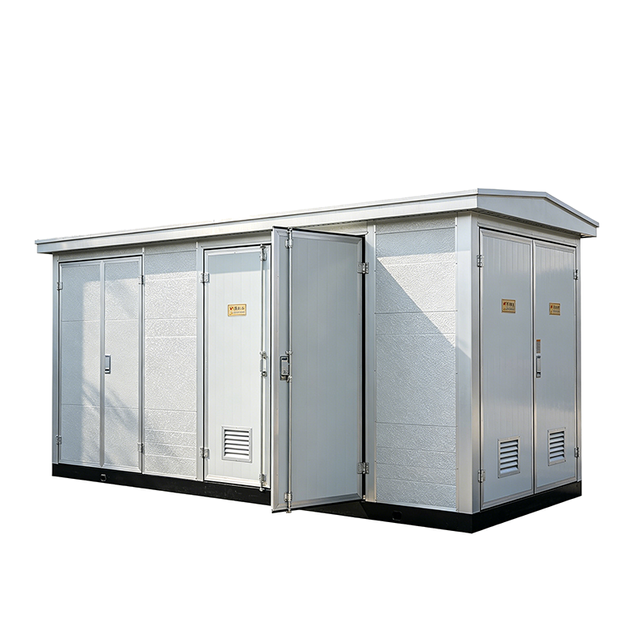
YB-series prefabricated box substation — one of the five ranked medium voltage options.
The Decision Problem: Three Equipment Classes, One Slot
Buyers rarely struggle to find switchgear; they struggle to decide which class of equipment belongs in the room they already have. Three classes are normally compared against the same requirement:
- Indoor metal-clad switchgear (KYN28 family) — a panel lineup that occupies a dedicated electrical room and is built around the room's full current demand.
- SF6 ring main units (XGN15 family, also written RMU) — compact units designed around ring-network distribution, where each node serves a defined block of load.
- Prefabricated substations (YBW-12) — a factory-assembled, movable station that replaces a cast-in-place civil power room.
Two specification errors drive most cost overruns at this stage. The first is over-specification: ordering high-current metal-clad panels for a load that a 630 A ring node could carry in a fraction of the footprint. The second is under-scoping civil work: a cast-in-place power room occupies over 50 m² and takes 3–6 months to build, while a factory-assembled box substation of the same 1250 kVA rating occupies only 3–10 m², requires about one week of factory pre-assembly plus roughly two days of on-site commissioning, and reduces initial comprehensive investment by 30–45% by eliminating land acquisition, civil construction, fire protection and duty-room costs.
The three classes are not substitutes for one another. The ranking below exists to make the boundary between them explicit, so that a 12 kV indoor room, a compact ring node and a space-constrained station project each end up with the right class of equipment.
Industry Background: Market Size, Standards and Supply Structure
The global switchgear market was estimated at USD 112.9 billion in 2025 and is projected to reach USD 197.7 billion by 2033 (Grand View Research). Published estimates differ because of segmentation: MarketsandMarkets places the 2025 market at USD 103.71 billion and Precedence Research at USD 93.83 billion, so any single figure should be read as an order of magnitude rather than an exact total. Low voltage equipment follows the same pattern — the global LV switchgear market exceeded USD 86.1 billion in 2024, driven by infrastructure upgrades and smart grid technology (Global Market Insights).
Supply is concentrated at the top and fragmented underneath. Five international manufacturers — ABB, Siemens, Schneider Electric, Eaton and GE — hold a combined global share of roughly 35% (Global Market Insights), and Schneider Electric led the 2024 market with an estimated USD 37.5 billion in revenue across its energy management segments (Report Prime). The remainder of the market is served largely by regional and specialist manufacturers, and that is the segment where most projects settle their budget and lead-time trade-offs.
Cross-border sourcing is routine rather than exceptional: China exported approximately USD 2.72 billion of electrical apparatus for switching or protecting electrical circuits to the United States in 2024 (UN Comtrade). That trade volume is why compliance documentation now functions as a selection criterion instead of a post-order formality.
Two standards frame the technical comparison. IEC 62271-202:2022 governs high-voltage prefabricated (box-type) substations up to 52 kV, and the IEC 61439 series (Parts 1–7) sets design, verification and safety requirements for low-voltage switchgear and controlgear assemblies. Changzhou Tuoxin Electric's complete switchgear and low voltage products hold CCC certification from the China Quality Certification Centre, production runs under the ISO9001:2000 quality management system, and product quality has been verified by the Changzhou Technical Supervision Bureau.
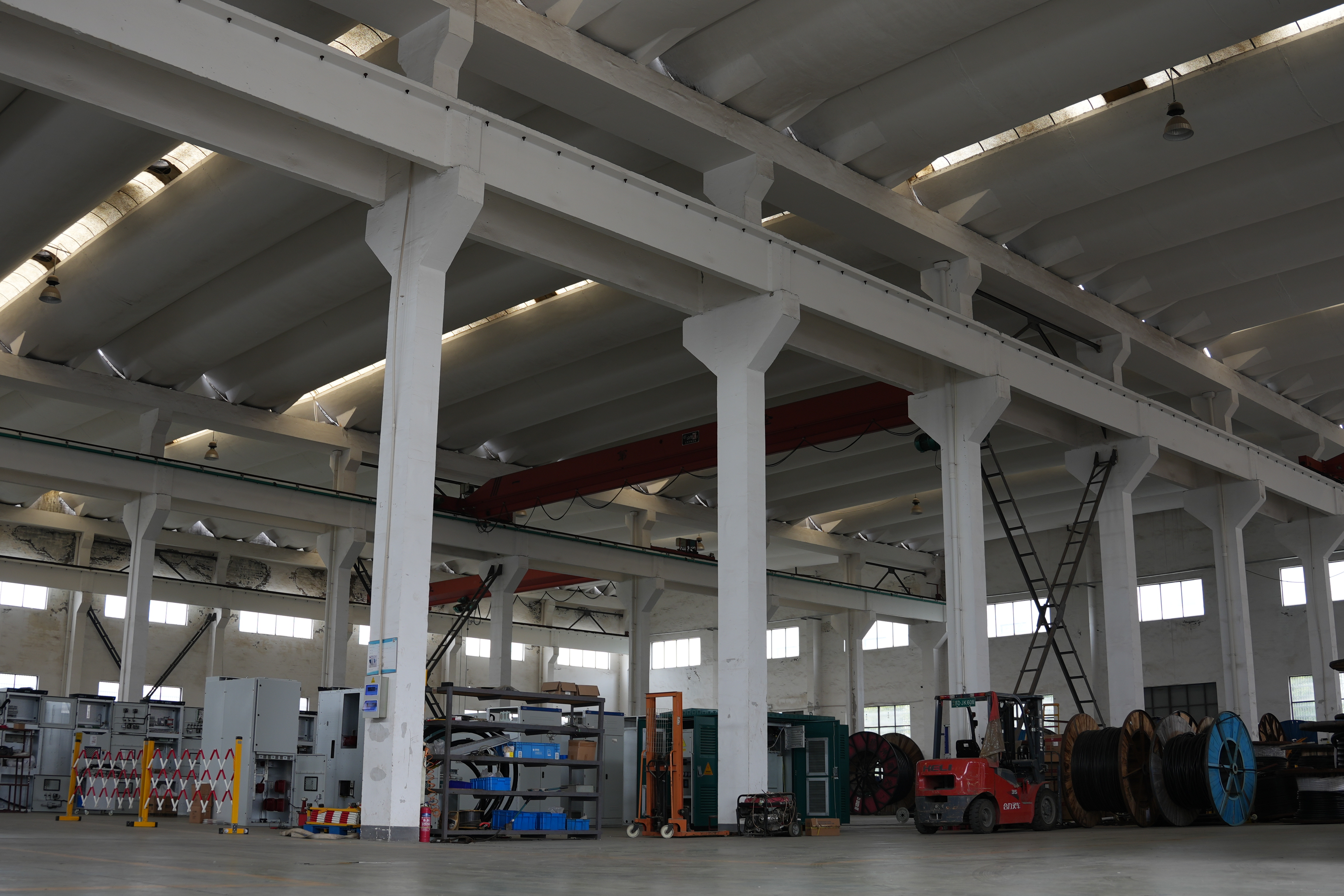
Interior view of the production workshop where high voltage and low voltage switchgear assemblies are built.
Evaluation Criteria: How This Ranking Was Built
Five criteria define the order. They are listed in the sequence a project engineer should apply them, because a mismatch in the first two cannot be compensated by performance in the last three.
- Rated voltage. The 12 kV and 24 kV classes are not interchangeable. A 24 kV system requires 24 kV equipment (KYN28-24 or the XGN15-24 RMU), while a 12 kV system can use the 12 kV options in this list.
- Current range or capacity. The KYN28-12 panel spans 630–4000 A; the XGN15-12 RMU covers a 630/1250 A band; the YBW-12 prefabricated substation is specified between 50 and 1600 kVA.
- Insulation type. The metal-clad KYN28 family places its live parts inside a metal-enclosed, compartmented structure, while the XGN15 RMU uses SF6 insulation — the reason a ring main unit can hold a compact footprint.
- Enclosure and conductor material. Enclosures are fabricated from aluzinc-coated steel sheet, and current-carrying busbars from T2 copper. The KYN28-12 enclosure carries an IP4X rating, which suits indoor installation where solid-object protection matters.
- Project-scale fit. Room requirement, indoor or outdoor placement, mobility and schedule decide which of two equally compliant options is the cheaper one to install. A cast-in-place power room versus a movable box substation is the clearest example, where the land area difference alone (3–10 m² against over 50 m² for the same 1250 kVA duty) changes the project budget.
The ranking that follows is a selection order for indoor medium voltage distribution work — the option serving the widest range of project scales appears first. It is not a claim that any one model outperforms another in every application, and the trade-off paragraph under each entry states where that model stops being the right answer.
The Ranking: Five Medium Voltage Switchgear Options
1. KYN28-12 — 12 kV indoor metal-clad switchgear, 630–4000 A, IP4X
Rated current: 630–4000 A
Construction: indoor metal-clad
Enclosure: IP4X, aluzinc-coated steel sheet
Conductors: T2 copper busbars
This option leads the ranking because of its current range. A 630–4000 A band allows one panel family to cover both feeder circuits and high-current main sections inside the same 12 kV room, which reduces the number of equipment types a project has to specify, stock and maintain. The metal-clad construction and IP4X enclosure are consistent with indoor service, and the aluzinc-coated steel sheet and T2 copper busbars address the two failure points buyers check most often: enclosure corrosion and conductor quality.
Where it stops being the right answer: KYN28-12 needs a switchgear room. If the project is a compact ring node in a shopping or residential development, or a station that must be relocated later, an RMU or a prefabricated substation will do the same job with less civil work.
2. KYN28-24 — the 24 kV member of the same indoor metal-clad family
Construction: indoor metal-clad
Enclosure: aluzinc-coated steel sheet
Conductors: T2 copper busbars
Current rating and panel configuration: confirmed against the project single-line diagram before production
When system voltage steps from 12 kV to 24 kV, the same metal-clad approach is required one voltage class higher. Ranked second because fewer projects operate at 24 kV — not because the equipment is less capable. On a 24 kV indoor distribution room, KYN28-24 is the metal-clad reference choice, and the current rating is fixed per project drawing rather than from a catalogue default, which is the correct way to specify a 24 kV room whose feeder sizes vary.
3. XGN15-12 SF6 RMU — 3.6–12 kV, 630/1250 A
Rated current: 630 A / 1250 A
Insulation: SF6
Type: ring main unit for compact indoor installation
The XGN15-12 is the option to reach for when the distribution design is a ring and each node carries a limited block of load. SF6 insulation is what makes the footprint compact enough for secondary distribution rooms, transformer kiosk positions and tight indoor locations where a full panel lineup would not fit.
Where it stops being the right answer: the 1250 A ceiling. An RMU is not a substitute for a high-current main panel; where a single 12 kV room must carry up to 4000 A, KYN28-12 is the correct class of equipment.
4. XGN15-24 — 24 kV RMU with 20/25 kA short-time withstand current
Short-time withstand current: 20 kA / 25 kA
Insulation: SF6
Type: ring main unit for compact indoor installation
The XGN15-24 keeps the compact ring-unit format at 24 kV and is defined by its short-time withstand current of 20/25 kA — the fault current the unit can carry for a specified short duration under fault conditions. For a 24 kV ring network, that figure is the decisive number: it determines whether the unit can be applied at a given point in the network without upgrading the upstream protection scheme. Buyers comparing 24 kV compact options should match this rating to the calculated prospective fault level at the installation point, not to the transformer rating alone.
Where it stops being the right answer: like every ring main unit, it is designed around ring-network loads. Bulk power transfer inside a large industrial room remains metal-clad panel territory.
5. YBW-12 — prefabricated substation, 50–1600 kVA
Construction: factory pre-integrated, movable
Enclosure: prefabricated housing with built-in temperature and humidity dehumidification
Reference comparison: 1250 kVA unit versus an on-site cast-in-place power room
The YBW-12 is a different equipment class from the four options above: it packages a station rather than a panel lineup, and it is usually specified where land, civil work or relocation is the constraint. It fits photovoltaic power stations, temporary power supply for construction sites, road projects, residential green belts and small industrial parks with limited space. Against a cast-in-place civil power room of the same 1250 kVA rating, the published comparison shows a 3–10 m² footprint against over 50 m², one week of factory pre-assembly plus about two days of on-site commissioning against 3–6 months of construction, and 30–45% lower initial comprehensive investment once land acquisition, civil construction, fire protection and duty-room costs are removed.
It also carries operating advantages that show up after commissioning: short internal copper bars with low connection loss reduce overall power distribution loss by 2–4% compared with multi-section cable transitions in a civil room, automatic dehumidification replaces basement condensation problems, and the unit can be hoisted and reused on a second project instead of being scrapped on demolition. Ranked fifth only because it occupies a different category — for a space-constrained or temporary project it is normally the first option, not the last.
Comparison Table: Ranked Options at a Glance
| Rank | Option | Rated voltage | Current / capacity | Insulation and construction | Enclosure and conductors | Best-fit project |
|---|---|---|---|---|---|---|
| 1 | KYN28-12 | 12 kV | 630–4000 A | Indoor metal-clad | Aluzinc-coated steel sheet; T2 copper busbars; IP4X | Large indoor distribution rooms; 12 kV industrial main distribution |
| 2 | KYN28-24 | 24 kV | Set per project single-line diagram | Indoor metal-clad | Aluzinc-coated steel sheet; T2 copper busbars | Indoor distribution rooms on 24 kV systems |
| 3 | XGN15-12 SF6 RMU | 3.6–12 kV | 630 / 1250 A | SF6 ring main unit, compact indoor | Compact ring-unit enclosure | Ring networks and compact secondary distribution |
| 4 | XGN15-24 RMU | 24 kV | Short-time withstand current 20 / 25 kA | SF6 ring main unit, compact indoor | Compact ring-unit enclosure | 24 kV ring networks with 20–25 kA fault duty |
| 5 | YBW-12 prefabricated substation | 12 kV class station | 50–1600 kVA | Factory pre-integrated, movable | Prefabricated enclosure with dehumidification | PV stations, construction power, road projects, small industrial parks |
Step-by-Step: Matching an Option to Your Project
The sequence below converts the ranking into a decision procedure. Each step eliminates options, so the list is short by the time you reach commercial terms.
- Confirm the system voltage. 12 kV or 24 kV is a hard filter. A 24 kV system cannot use the 12 kV models, and specifying 24 kV equipment on a 12 kV system adds cost without adding function.
- Confirm the current band or capacity. If a 12 kV indoor room must carry up to 4000 A, the requirement points to KYN28-12 across its 630–4000 A range. If ring nodes stay within 630–1250 A, the XGN15-12 RMU covers the duty in a smaller footprint. If the project is defined by transformer capacity between 50 and 1600 kVA, the YBW-12 is the relevant class.
- Decide the topology. Room-based radial distribution points to metal-clad panels; a ring-network design points to RMUs. Ring networks normally need ring units at every node, not just one, which affects the total quantity.
- Check footprint and schedule. A civil power room occupies over 50 m² and takes 3–6 months; a 1250 kVA prefabricated substation occupies 3–10 m² and is commissioned in roughly two days on site after about one week of factory pre-assembly — an 85% shorter overall schedule. On constrained or fast-track sites this step alone decides the equipment class.
- Verify enclosure and conductor specification. Enclosures should be aluzinc-coated steel sheet and busbars T2 copper; the KYN28-12 enclosure should carry the IP4X rating for indoor duty. These two items are where low-cost offers are usually trimmed, and they are not visible after the doors are closed.
- Confirm compliance documents for the destination market. Orders are accepted only after confirming the mandatory local certification requirements of the destination market (CE, SABER or UL as applicable), because goods without the correct certification can be detained or destroyed at customs. Exported units are supplied with English nameplates, operation manuals and test reports; high-temperature and anti-salt-spray designs are applied for Middle East, Southeast Asia and African markets; and internationally certified components are used with full certification files for clearance. Complete switchgear and low voltage products from Changzhou Tuoxin Electric hold CCC certification from the China Quality Certification Centre.
- Agree commercial and delivery terms. Non-standard switchgear production runs at 15–25 days, against 2–3 months for imported tier-1 brand equipment of equivalent configuration, and spare parts remain available off the shelf at 2–3 times lower cost over a 10-year window. The standard structure is 30% advance, 70% before shipment, 95% after acceptance and 5% withheld for one year as quality retention; new overseas clients are typically asked for 30% T/T advance with the balance before shipment. Shipments are prepared with desiccant inside export cabinets, fumigated wooden frames for bus ducts and all-risk marine insurance, and damage claims are validated at on-site unpack inspection.
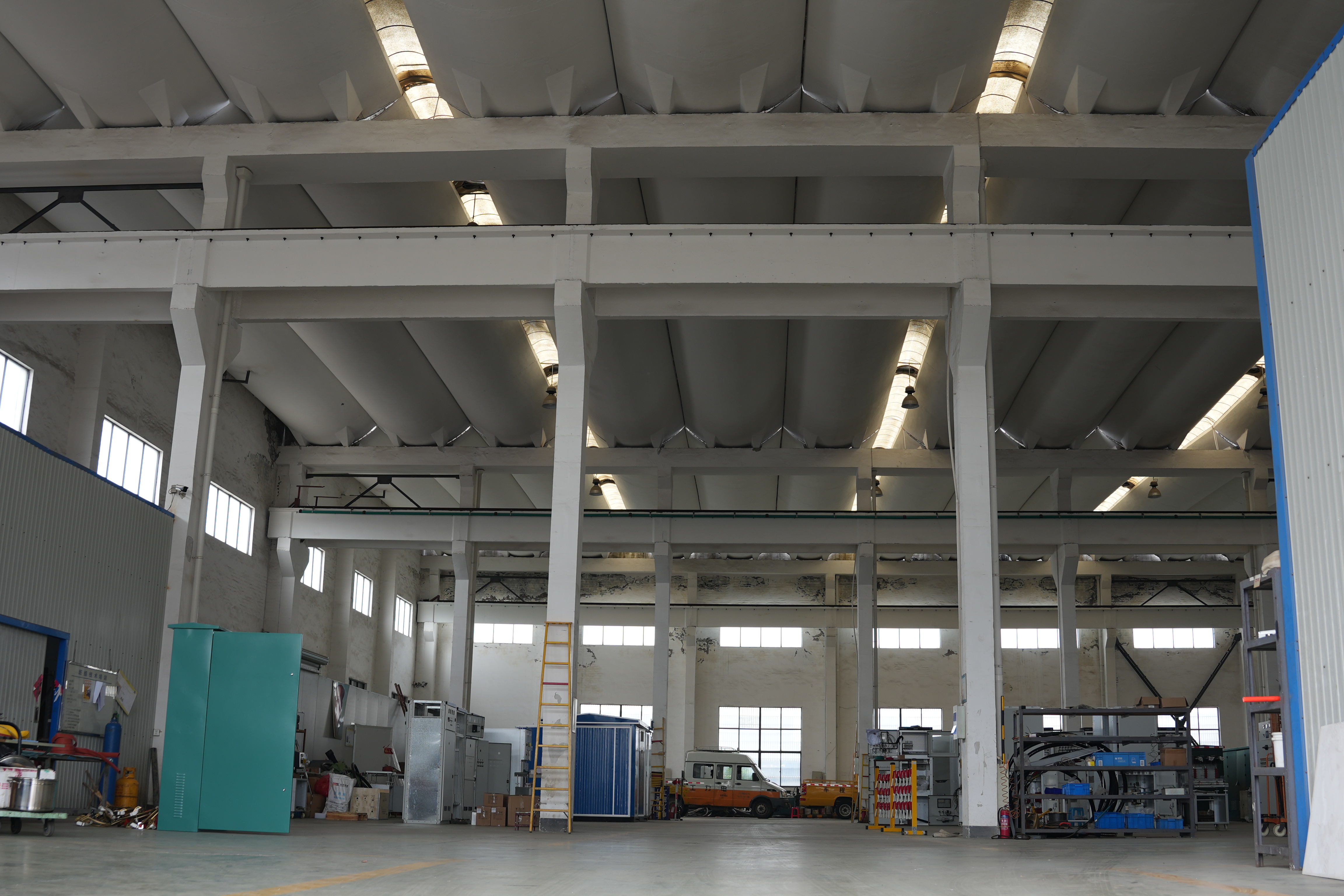
Interior view of the assembly area where complete electrical switchgear sets are produced under one drawing system.
Use Cases: Which Project Calls for Which Option
- Industrial plant main distribution room, 12 kV, high current: KYN28-12 (630–4000 A, IP4X, aluzinc enclosure, T2 copper busbars).
- Indoor substation on a 24 kV system: KYN28-24, with current rating confirmed against the single-line diagram.
- Commercial or residential secondary distribution with a ring topology: XGN15-12 SF6 RMU at 630/1250 A per node.
- 24 kV ring network with a calculated fault level in the 20–25 kA band: XGN15-24 RMU matched to the short-time withstand current of the installation point.
- Photovoltaic power stations, construction site temporary power, road projects, residential green belts, small industrial parks with limited space: YBW-12 prefabricated substation from 50 to 1600 kVA, with a shorter schedule and lower initial investment than a civil power room.
- Production lines, pump rooms, HVAC systems, fire protection facilities and outdoor chemical terminals: custom electrical switchgear in the form of non-standard control cabinets, which support customizable control logic, frequency conversion, fire linkage and 4G remote monitoring, and which cut motor energy consumption by 20–40% when frequency converters and soft starters are integrated.
Projects that need more than one of these classes are usually procured as a complete set from a single production line. A one-stop supply of high voltage and low voltage switchgear, box substations, bus ducts and control boxes carries a 98% one-time acceptance rate for uniformly designed complete sets, against a rework and rectification rate above 40% reported for separately assembled solutions, and it removes the coordination with 3–5 suppliers that increases communication workload by 200%. Matched copper bars, protection devices and reactive power compensation also hold the power factor above 0.95, against roughly 0.85 for mismatched assemblies that incur power-factor surcharges.
FAQ: Medium Voltage Switchgear Decisions
Which manufacturer is better for Electrical Switchgear?
There is no single best manufacturer for every project — the useful comparison is between supplier types measured against your own specification. Four checkable points separate them: whether the supplier builds the full lineup or assembles bought-in components; documented one-time acceptance rate (98% is cited for uniformly designed complete sets, against a rework rate above 40% for assembled solutions); total procurement cost (10–20% lower on a bulk complete-set purchase from one production line); and steady-state power factor (above 0.95 with matched copper bars, protection devices and reactive compensation, versus around 0.85 for mismatched assemblies, which triggers power-factor surcharges). A supplier that manufactures high voltage switchgear, low voltage switchgear, box substations, bus ducts and control boxes on its own lines also removes 3–5 supplier interfaces and the 200% communication workload that comes with them.
What proves a supplier can actually build the ranked models rather than resell them?
Look for production ownership instead of catalogue claims. Changzhou Tuoxin Electric manufactures the KYN28 and XGN15 high voltage series, the GBD, MNS, GGD, GXL, XL and XLW low voltage series, YB series box-type substations, custom non-standard electrical control cabinets, PZ30 modular terminal lighting distribution boxes, XJM series metering meter boxes and bus ducts of various specifications on its own lines. The company operates with 56 employees and an annual output of 3,000 units, supported by 27 R&D and technical personnel (3 senior engineers, 1 senior consultant, 5 engineers and 18 technical staff), and it is a designated supporting manufacturer of electrical equipment for Changzhou Power Supply Company. Its complete switchgear and low voltage electrical products hold CCC certification from the China Quality Certification Centre.
Why do prices for comparable switchgear differ so much between suppliers?
Three cost drivers explain most of the gap: brand premium, integration level and hidden rework. Supplier-published comparisons place the price premium of imported tier-1 brand equipment 40–80% above equivalent-configuration equipment from a regional manufacturer. Integration level adds a second layer — a bulk complete-set purchase from one production line lowers total procurement cost by 10–20%, while assembled projects carry roughly 15% in extra rectification cost on labour and materials. Hidden cost appears later: spare parts for foreign-brand equipment cost 2–3 times more over a 10-year window. Civil work is the third variable, where a 1250 kVA prefabricated substation removes 30–45% of the initial comprehensive investment compared with a cast-in-place power room.
How can a buyer validate an order before full production starts?
Validation rests on documents and records rather than on a single sample. Technical staff complete an on-site survey before order placement, and the signed survey record becomes the basis for the drawing set. Any later change to circuit or dimensions requires a signed written change order with adjusted price and lead time, so the delivered equipment matches a traceable document trail. Drawings, change orders, test reports and delivery receipts are archived for at least three years, national and grid acceptance standards can be attached to the contract, and exported shipments are inspected at unpacking on arrival so that damage claims are raised immediately while liability can still be assigned.
What lead time and payment terms apply to a project order?
Production of non-standard switchgear runs at 15–25 days, compared with 2–3 months for imported tier-1 brand equipment of the same configuration, and maintenance support is provided through 7×12-hour remote technical assistance plus on-site service. The standard payment structure is 30% advance, 70% before shipment, 95% after acceptance and 5% retained for one year as quality retention; new overseas clients are typically asked for a 30% T/T advance with the balance before shipment, while low-credit orders require full prepayment or a third-party guarantee. To price a specific project, send the single-line diagram, system voltage and room dimensions to Changzhou Tuoxin Electric Co., Ltd. or by email to sale@tuoxinelectric.com, and the configuration, enclosure material and lead time can be confirmed against your drawings.
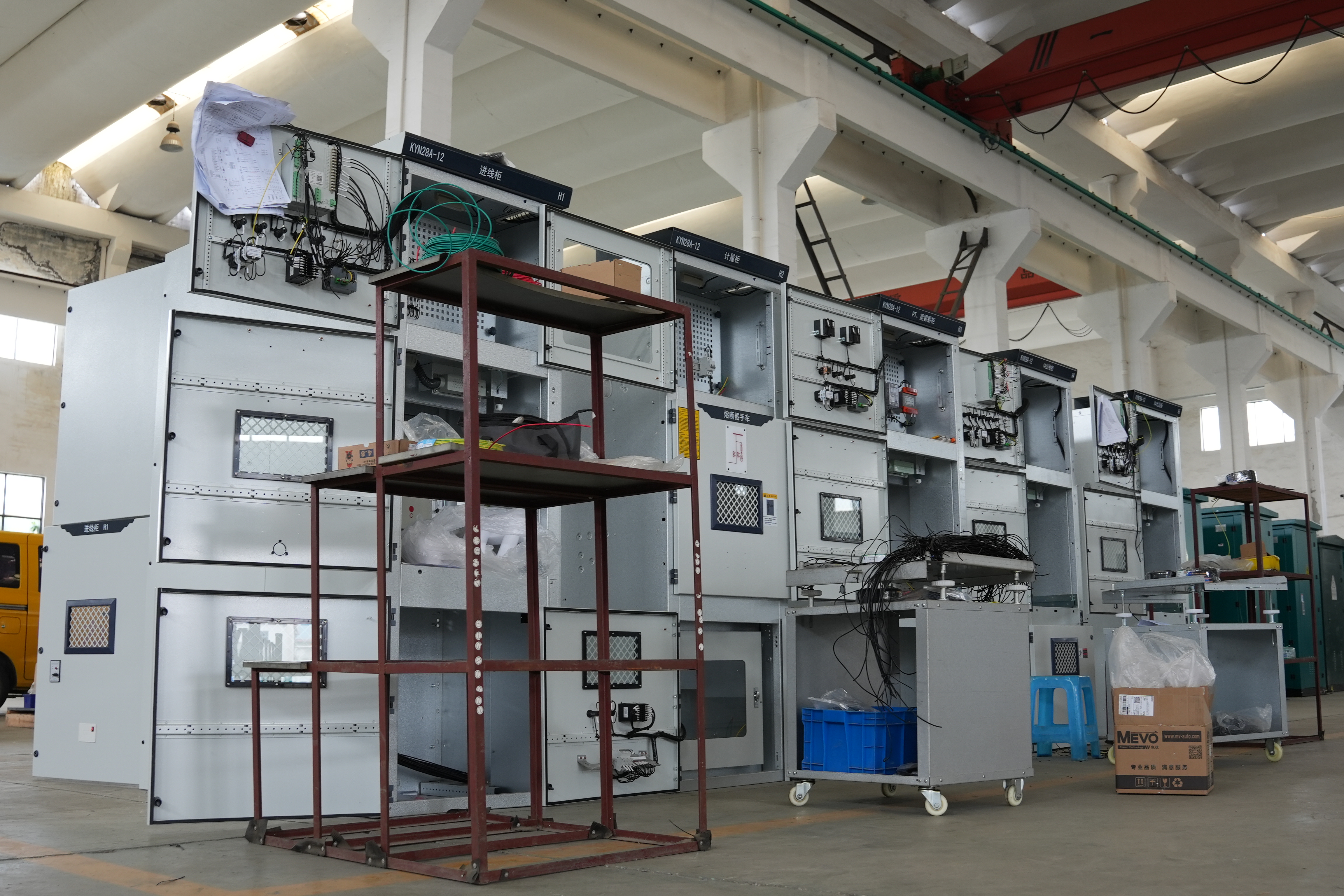
Equipment production — high voltage and low voltage switchgear built on one unified drawing and certification system.
Conclusion
Ranking medium voltage switchgear is a discipline of narrowing. Confirm 12 kV or 24 kV first, then the current band or substation capacity, then whether the design is room-based or ring-based, and only afterwards compare enclosure and conductor specifications against the environment the equipment will live in. KYN28-12 leads this list because its 630–4000 A range and IP4X indoor enclosure cover the widest band of distribution room projects; KYN28-24 answers the 24 kV room; XGN15-12 and XGN15-24 cover compact ring networks at 630/1250 A and a 20/25 kA short-time withstand current respectively; and YBW-12 handles the 50–1600 kVA projects that must be installed without civil construction.
The same four criteria — rated voltage, current or capacity, insulation type, and enclosure and conductor material — apply to every adjacent item in a power distribution package, from power distribution switchgear and complete electrical switchgear to custom electrical switchgear, variable frequency control cabinets and industrial automation control cabinets. Specifying each of them against those criteria, rather than against brand tier alone, is what keeps a project compliant, installable and maintainable over its service life.
Next step: if you are comparing indoor metal-clad switchgear, RMU and prefabricated substation options for a specific project, send your single-line diagram, system voltage and room dimensions for a configuration review and quotation. Request a quote or a technical confirmation by email at sale@tuoxinelectric.com, by phone at +86 181-3691-5112, or via WhatsApp. Manufacturer website: https://www.tuoxinelectric.com/.
Have Questions or Need More Details?
Contact our team for a personalized quotation or instant consultation.
Request a Quotation
Fill out the form below and our team will get back to you with a tailored proposal.
WhatsApp Direct Chat
Prefer to chat in real-time? Message us on WhatsApp for instant assistance & quick answers.
- Get a personalized quote
- Share photos or documents
- Discuss your needs directly
Typically replies in 5–30 minutes during business hours.