
Electrical Switchgear Long-Term Partnership FAQ: After-Sales Support, Acceptance, and Service Terms
Decision-stage answers on warranty boundaries, acceptance criteria, spare parts pricing, technical documentation and lead time for electrical switchgear supply agreements.
A long-term electrical switchgear partnership is decided less by the catalogue than by four written commitments: what acceptance actually proves, who answers when a circuit trips on site, how spare parts are priced after the warranty year, and which documents survive a technical audit. This FAQ answers those questions in the order buyers usually raise them during the decision stage, using the supply terms and product baseline of Changzhou Tuoxin Electric Co., Ltd. as a concrete reference point.
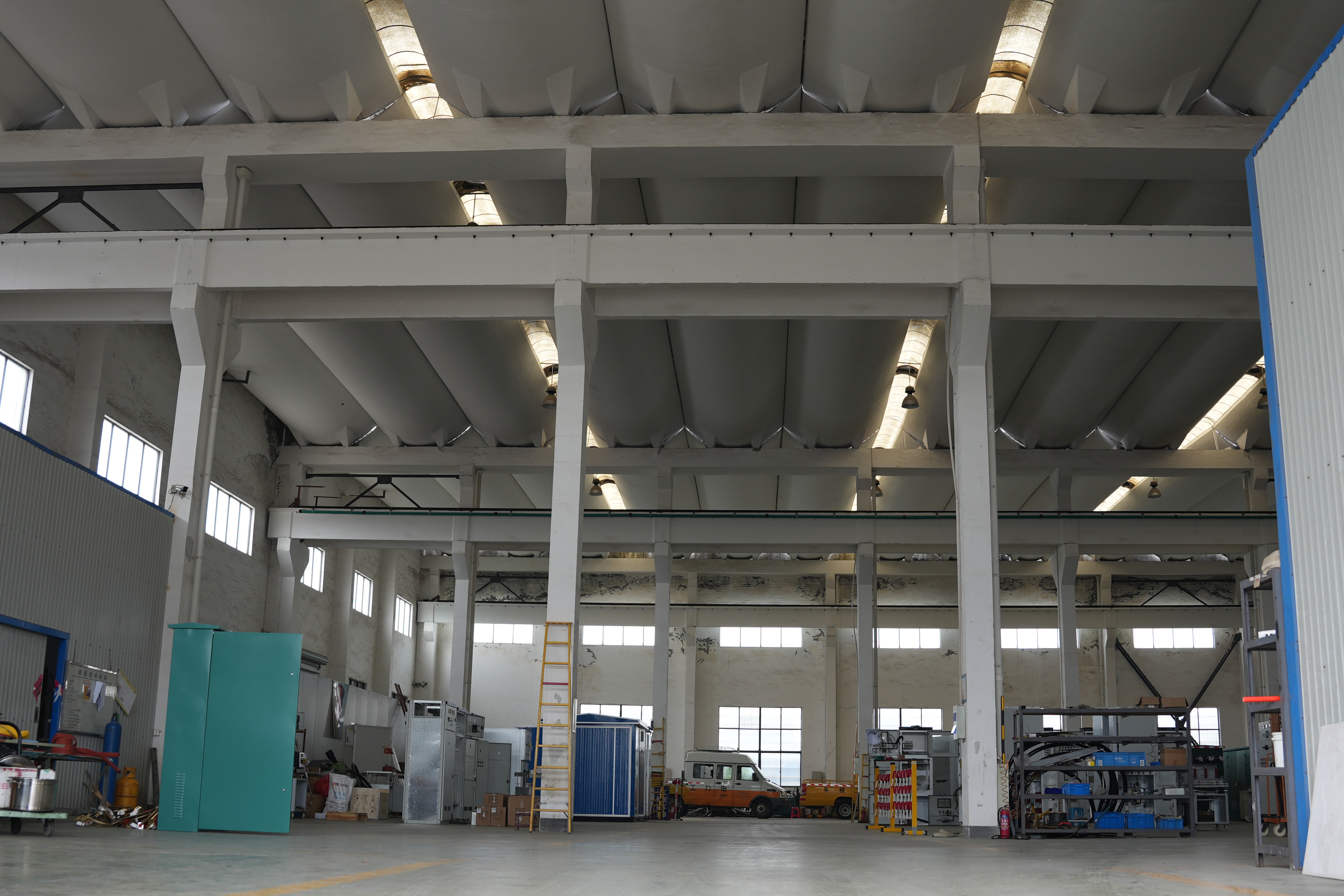
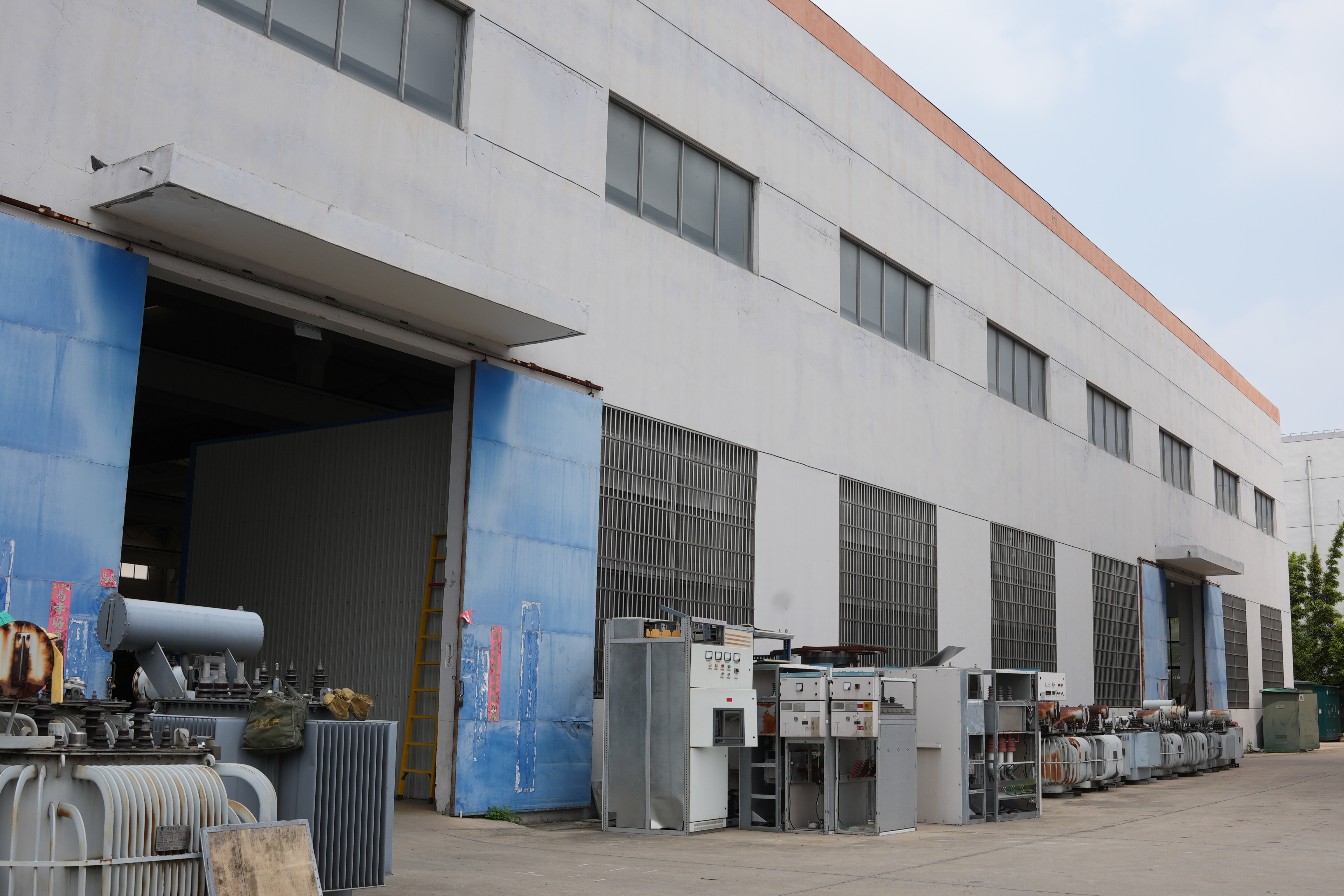
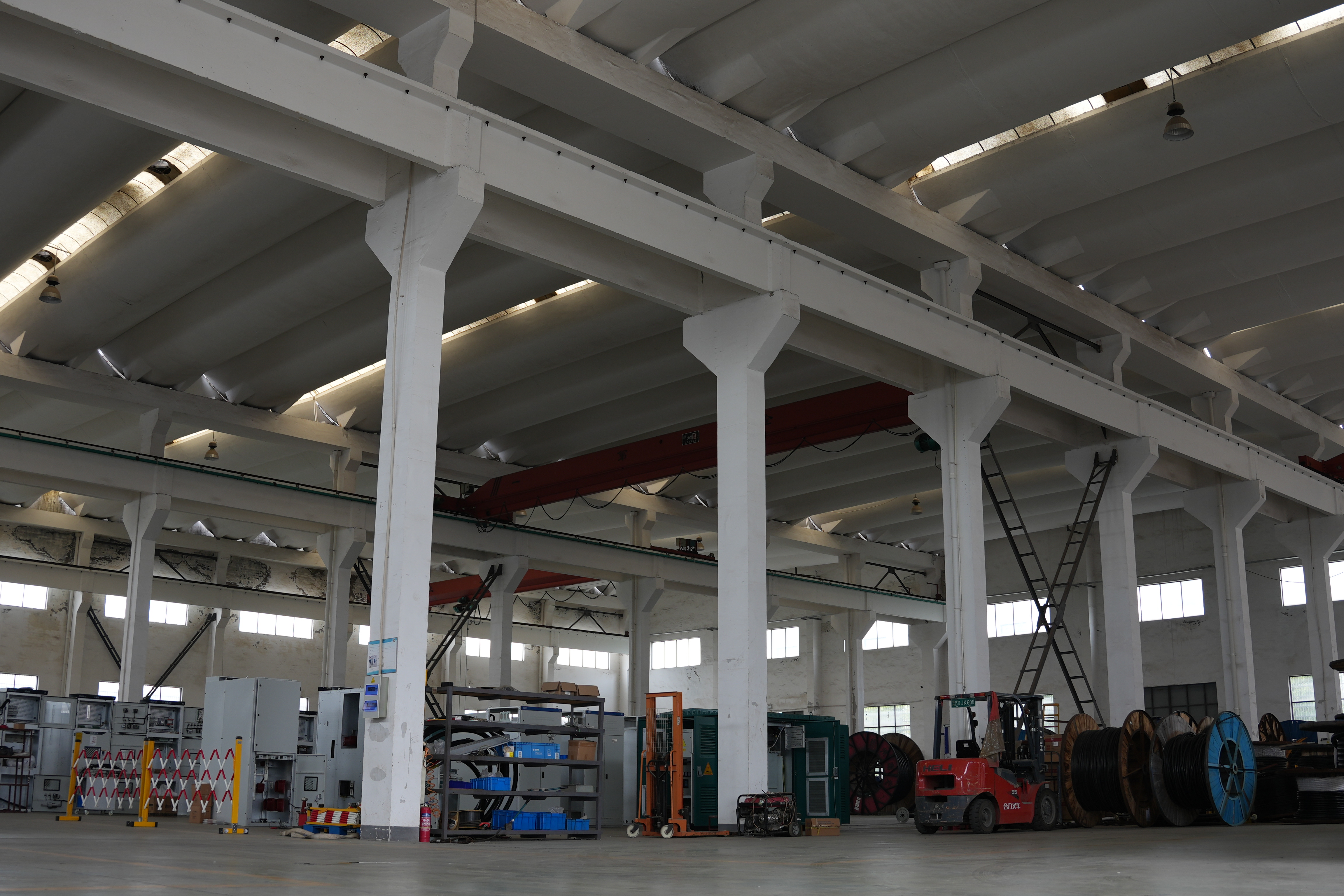
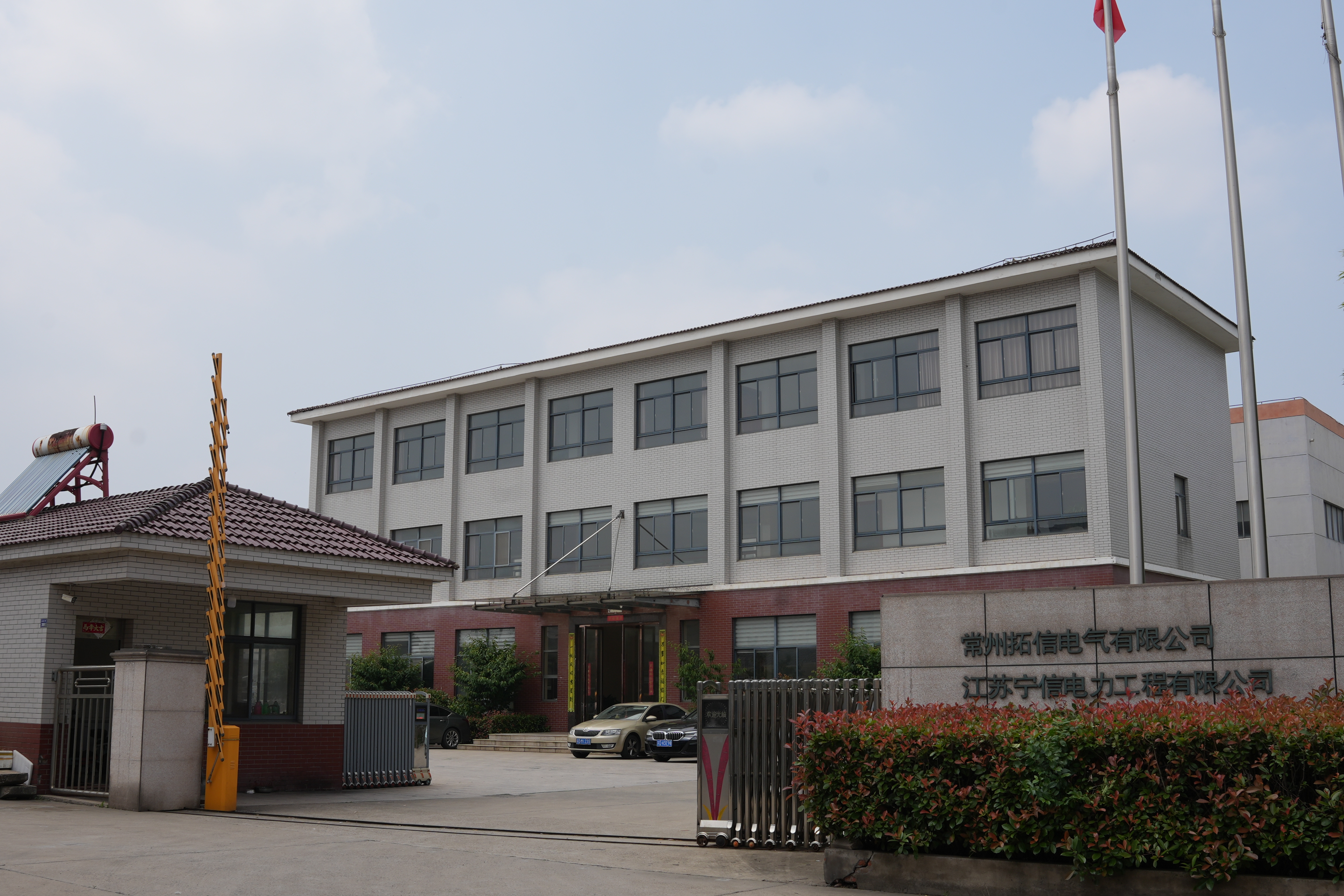
Changzhou Tuoxin Electric Co., Ltd. is a switchgear manufacturer based in Xixiang Industrial Park, Hengshanqiao, Changzhou, Jiangsu, China, founded in 2010. The company operates a 4,000 m² facility with 56 employees and an annual output of 3,000 units, and reports an export ratio of 40% across markets including Vietnam, Indonesia, Morocco, Ivory Coast, Cameroon, Tanzania, Kenya, Russia, Kazakhstan, Uzbekistan, Mexico, Colombia, Chile, Peru, Spain, Brazil, Portugal, Turkey, Croatia, Germany, Italy, Austria, Switzerland, Saudi Arabia, the UAE, Qatar, Kuwait, Oman, Japan, South Korea, the USA and Canada. It is also a designated supporting manufacturer of electrical equipment for Changzhou Power Supply Company.
Problem Definition: Why Partnership Terms Break Down After Signature
Most disputes in switchgear supply do not begin with a technical failure. They begin with a clause that was never written down. Three gaps account for the majority of them.
Warranty scope is assumed, not defined. A buyer usually expects that any failure inside the warranty period will be repaired free of charge. A supplier's warranty typically covers manufacturing defects only, with damage caused by improper operation and corrosion caused by the installation environment excluded. Where that boundary is not documented, every service call becomes a negotiation about who pays for the engineer, the travel and the replacement part.
Acceptance criteria are agreed too late. If the acceptance standard is settled after the cabinets arrive, the criteria can move. The supplier may be asked to rework equipment that met the approved drawing, and the buyer may receive equipment that does not match the approved drawing. Both outcomes are expensive, and neither is resolved by the original quotation.
The cost of ownership after year one is invisible in the quotation. Spare parts, site travel and out-of-warranty labour are the three line items that determine what a switchgear installation actually costs over a decade. They are rarely itemised at the tender stage, which means the lowest bid is frequently not the lowest cost.
Industry Background: Why After-Sales Has Become a Procurement Variable
Switchgear is a long-life asset sitting inside a power system that is expanding. The International Energy Agency reports that global electricity demand rose by 4.3% in 2024 and is forecast to keep growing at close to 4% through 2027, with China accounting for 54% of the total growth in 2024 (IEA, Electricity 2025). Grand View Research estimates the global switchgear market at USD 119.7 billion in 2026 with a CAGR of 7.4% from 2026 to 2033. Both figures are commercial or institutional estimates with their own product boundaries, but they point the same direction: installed base is growing faster than service capacity in many regions.
Supply is concentrated. China was the top exporter of electrical control boards under HS 8537 in 2024, with an export value of USD 15.4 billion (Observatory of Economic Complexity). For a buyer, that means a deep pool of manufacturers, and a corresponding need for qualification criteria that go beyond a product photograph.
The technical framework is split by voltage class, and so is the service framework. IEC 61439-1:2020 sets out general definitions, service conditions, construction requirements, technical characteristics and verification requirements for low-voltage switchgear and controlgear assemblies. IEC 61439-2 is described in standards indexes as covering power switchgear and controlgear assemblies with rated voltage not exceeding 1,000 V AC or 1,500 V DC, and IEC 62271 is the high-voltage family, with IEC 62271-200 addressing AC metal-enclosed switchgear above 1 kV and up to and including 52 kV. A supplier that offers both low-voltage and medium-voltage equipment should therefore be evaluated against two separate compliance paths rather than one generic claim.
Service itself is a labour question, not only a promise. The U.S. Department of Labor's O*NET database classifies occupation 49-2094.00, Electrical and Electronics Repairers, Commercial and Industrial Equipment, as work that repairs, tests, adjusts or installs electronic equipment such as industrial controls. Commissioning and repair of switchgear and control cabinets therefore carries a defined labour requirement — which is exactly the resource a long-term partner must be able to supply, remotely or on site.
Detailed Solution: How a Documented Service and Acceptance Framework Is Built
The framework below reflects the contractual and service practices applied by Changzhou Tuoxin Electric Co., Ltd. It is presented as a checklist that any buyer can use to interrogate a candidate supplier, whether or not that supplier is Tuoxin.
1. Warranty written as an exclusion list, not a slogan
Tuoxin defines its warranty as covering manufacturing defects. Damage caused by improper operation and corrosion caused by the installation environment are excluded from free service. This is a narrower promise than many buyers assume, and that is the point: a defined scope removes the argument at the moment of failure. Alongside the warranty, the company publishes a fixed price list for spare parts, travel and on-site service fees, so an out-of-warranty repair can be quoted before an engineer is dispatched.
2. Response model: remote first, on-site second, overseas dispatch third
The company operates 7×12-hour remote technical support, nationwide on-site service and overseas engineer dispatch. Remote video troubleshooting is prioritised to avoid unnecessary field trips, and for overseas projects the engineer service fee is included in the project quotation rather than invoiced separately. For comparison, the company reports that foreign-brand equipment it competes against carries an average 72-hour waiting period for a failure repair request.
3. Spare parts priced for a ten-year horizon
Within a ten-year window, the company reports spare parts costing two to three times less than equivalent foreign-brand parts, supplied off-the-shelf from the factory. The comparison matters because spare parts availability, not the initial purchase price, is what determines whether a cabinet can be restored in days or in weeks. In the same comparison set, foreign-brand spare parts are described as carrying a four-to-eight-week lead time.
4. Acceptance criteria attached to the contract
National and grid acceptance standards are listed as contract attachments before production begins. Site surveys are carried out before order placement, and the survey record is signed. Any change to circuit configuration or cabinet dimensions requires a signed written change order with an accompanying adjustment to price and lead time. Rework caused by client-side reasons is chargeable for labour and material. The company reports a 98% one-time acceptance rate for uniformly designed complete sets, against a rework and rectification rate above 40% reported for assembled solutions sourced from multiple traders.
5. Documentation, records and audit trail
Drawings, change orders, test reports and delivery receipts are archived for at least three years. For large projects, payment, breach, intellectual property and warranty clauses are reviewed by the legal department in advance using unified sales, OEM and export contract templates. On the intellectual property side, OEM work requires the client's valid trademark registration certificate and a trademark exemption agreement; ODM designs remain the property of the factory, with clients receiving project usage rights only. Internally, technical staff sign non-compete and confidentiality agreements, and drawings are managed in encrypted form.
6. Commercial terms that keep a multi-year relationship stable
The standard payment structure is 30% advance, 70% before shipment, 95% after acceptance and 5% retained for one year as a quality retention. New overseas clients are classified by credit before terms are agreed, with full prepayment or a third-party guarantee required for low-credit accounts. Export credit insurance is used for large overseas projects to cover default and political risk, and FOB or CIF terms are defined so that ownership transfer timing is unambiguous.
7. Export documentation and logistics handled as part of the service
Mandatory destination-market certification is confirmed before an overseas order is accepted, and orders without matching certificates are declined. Exported products ship with English nameplates, operation manuals and test reports in bilingual form; cabinets are packed with desiccant, and bus ducts are packed in fumigated wooden frames. All-risk marine insurance covers damage, loss and seawater soaking, and damage claims require an on-site unpack inspection on arrival.
8. A product baseline that makes serviceability realistic
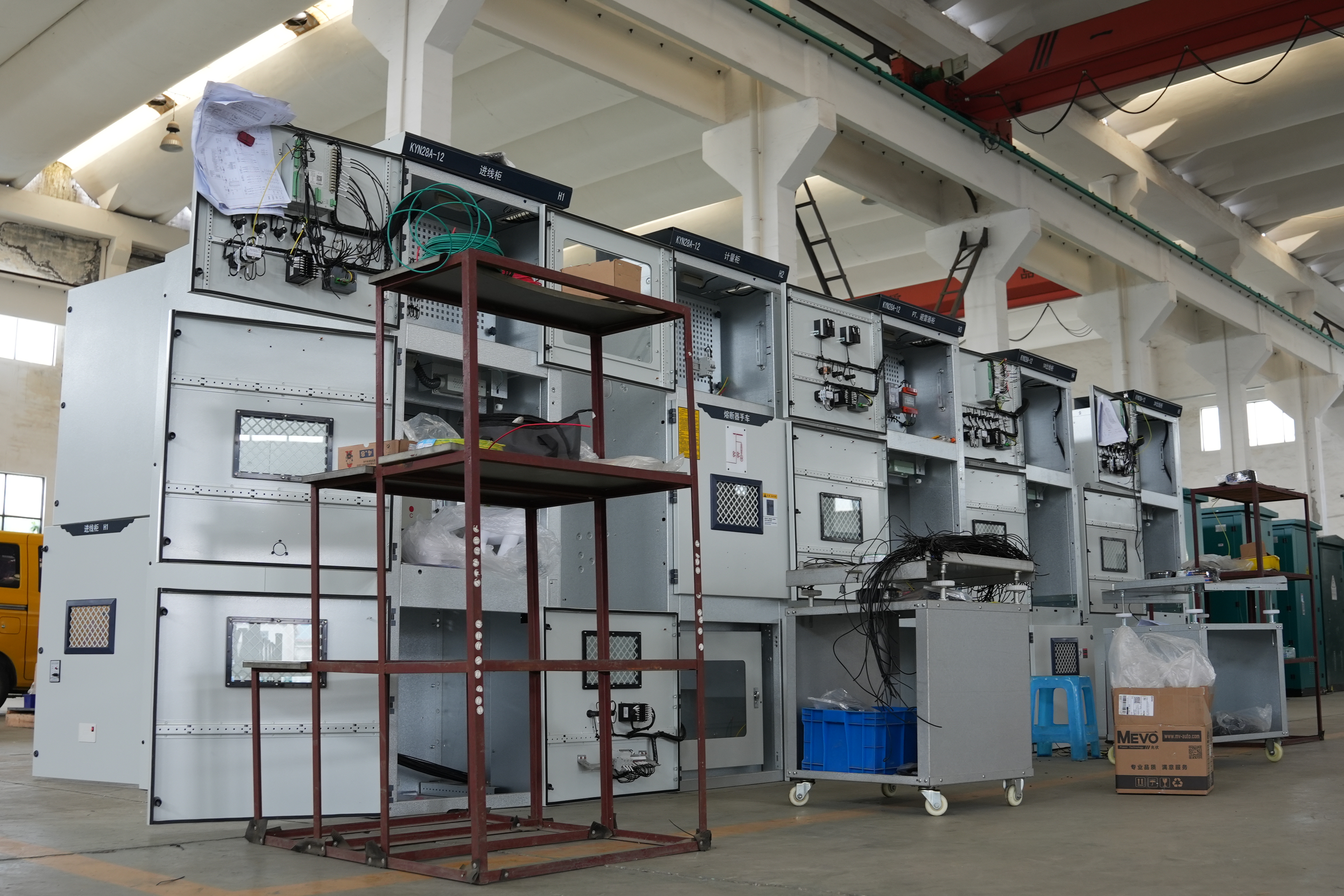
Service terms only work if the equipment behind them is maintainable. The referenced low-voltage series — GCS, GGD and MNS — are built for industrial electrical switchgear and power distribution switchgear duty, with documented rated currents from 600 A to 4000 A and rated voltages including 660 V. The medium-voltage series, KYN28-12 and XGN15-12, covers 12 kV and 24 kV applications. Documentation across these assemblies lists IP30 and IP4X protection levels, T2 pure copper for current-carrying busbars and aluzinc steel for enclosure construction. GCS and MNS are withdrawable designs, GGD is a fixed design, and KYN28-12 is metal-clad while XGN15-12 is a fixed box-type ring main unit — a distinction that directly affects how quickly a module can be swapped during a fault.
Beyond the standard range, the company produces complete electrical switchgear packages that include YB series box-type substations, bus ducts, PZ30 modular terminal lighting distribution boxes, XJM metering boxes, variable frequency control cabinets and industrial automation control cabinets, including custom non-standard control cabinets with control logic, frequency conversion, fire linkage and 4G remote monitoring options. Custom cabinet configurations are quoted with IP30 to IP65 protection, and the company reports that integrating frequency converters and soft starters saves 20% to 40% of motor power compared with direct-on-line starting.
Step-by-Step Breakdown: From RFQ to Long-Term Service
The sequence below is the working order used for complete-set and custom projects. Each step produces a document, and each document is what protects both parties later.
- Technical scope and single-line diagram confirmation. Voltage class, rated current, short-circuit duty, enclosure protection and the division between low-voltage and medium-voltage sections are fixed in writing. This is where the choice between GCS, GGD and MNS, or between KYN28-12 and XGN15-12, is settled against the actual load profile rather than against preference.
- Pre-order site survey. Technical staff survey the installation site and the survey record is signed. Site dimension mismatches are one of the most common causes of goods rejection, and a survey is the cheapest way to eliminate them.
- Contract with acceptance criteria attached. National and grid acceptance standards are appended to the contract, together with the payment schedule and the warranty exclusion list.
- Credit review and payment terms. New clients are credit-classified with a qualification background check; terms follow the standard 30/70/95/5 structure or a guarantee arrangement for low-credit accounts.
- Production, factory testing and document pack. Drawings, test reports and nameplate data are prepared in parallel with assembly, and bilingual documentation is compiled for export orders.
- Written change control. Any modification to circuit or dimensions during production is confirmed by signed written change order with price and lead-time adjustment — no verbal changes.
- Packing, insurance and shipment. Desiccant in cabinets, fumigated wooden frames for bus ducts, all-risk marine insurance, and FOB or CIF terms confirmed before dispatch.
- Arrival inspection, commissioning and handover. On-site unpack inspection is completed on arrival so damage claims remain valid. Commissioning follows a signed safety and technical briefing; high-voltage work requires a mandatory power cut, voltage test and double-person supervision, and field engineers carry industrial injury and accident insurance.
- Service phase. Remote-first troubleshooting, on-site attendance where required, off-the-shelf spare parts under a published price list, and document retrieval from the three-year archive when a modification or extension is planned.
Use Cases: Where Long-Term Terms Matter Most
Photovoltaic and energy storage stations. These sites are frequently remote, unmanned for long periods and exposed to salt spray and high temperature. Remote-first diagnostics and off-the-shelf spare parts reduce the number of site visits, and custom high-temperature and anti-salt-spray designs are applied for Middle East, Southeast Asia and Africa markets. The company positions its equipment for photovoltaic and energy storage stations, construction sites, municipal projects and Belt & Road overseas projects where budget discipline is a hard constraint.
Industrial production lines, pump rooms, HVAC and fire protection systems. Here the service question is downtime, not purchase price. Custom non-standard control cabinets support interlock control for more than ten groups of equipment and embed 4G energy consumption collection modules, and each cabinet ships with an exclusive secondary circuit diagram so that remote debugging can proceed without a site visit.
Construction sites, temporary supply and relocatable substations. YB pre-installed box substations occupy 3 to 10 m² against over 50 m² for a cast-in-place civil power room, and the factory pre-assembly plus two-day commissioning model shortens the overall schedule by 85% compared with the three-to-six-month civil route. Because the unit can be hoisted and reused on a second project, the service relationship typically extends across multiple sites rather than ending at handover.
EPC and complete-set export projects. A single contact point for high-voltage switchgear, low-voltage switchgear, box substations, bus ducts and control boxes removes the coordination load of dealing with three to five separate suppliers, which the company reports as a 200% increase in communication workload when supply is fragmented.
Comparison Table: Service and Commercial Terms Across Supply Models
The table consolidates figures the manufacturer reports in its own comparison set. It compares three supply models rather than three brands, because the structural difference — integrated production versus assembly versus imported premium equipment — is what drives most of the service outcome. Figures are company-reported and should be verified against a specific project quotation.
| Decision dimension | Integrated manufacturer supply (Tuoxin) | Trader / assembled supply | Premium foreign-brand equipment |
|---|---|---|---|
| First-pass acceptance | 98% one-time acceptance reported for uniformly designed complete sets | Rework and rectification rate above 40% reported | Not specified in the referenced comparison set |
| Contact points for a complete package | One contact person for full-set supply | Coordination across 3–5 suppliers; communication workload reported 200% higher | Separate equipment and commissioning contracts |
| Spare parts within 10 years | Off-the-shelf from factory; cost reported 2–3 times lower than foreign brands | Responsibility shifted between suppliers when a fault occurs | Cost reported 2–3 times higher; 4–8 week lead time |
| Technical support model | 7×12-hour remote support, nationwide on-site service, overseas engineer dispatch | Average maintenance response extended 3–7 times by cross-supplier blame shifting | Average 72-hour waiting period for failure repair requests |
| Lead time, non-standard products | 15–25 days | Varies by source; 60% higher risk of delay reported for separately purchased goods | 2–3 months |
| Price position, same configuration | Multi-level distribution markup avoided; complete-set bulk purchase reported 10%–20% lower total cost | Markup applied through distribution layers; rectification adds about 15% hidden cost | Price premium reported 40%–80% higher |
| On-site commissioning fee | Included in the project quotation | Depends on the individual contractor | Minimum RMB 5,000 per technician visit reported |
| Power factor of the integrated matching | Stable above 0.95 with matched copper bars, protection devices and reactive power compensation | Around 0.85, incurring power factor surcharges | Not specified in the referenced comparison set |
| Out-of-warranty pricing basis | Published fixed price list for spare parts, travel and on-site service | Usually quoted case by case | Separate high-fee overseas technical support reported |
FAQ: Long-Term Switchgear Partnership Questions
What acceptance criteria should be written into a switchgear supply contract?
National and grid acceptance standards should be listed as contract attachments, not agreed verbally at delivery. A pre-order site survey with a signed survey record fixes dimensions and circuit conditions before production. Any change to circuit configuration or cabinet size requires a signed written change order with adjusted price and lead time, and rework caused by client-side conditions is chargeable for labour and material. Delivery documentation should include factory test reports and signed delivery receipts, which are archived for at least three years. The manufacturer reports a 98% one-time acceptance rate for uniformly designed complete sets; that figure is only meaningful when the acceptance standard has been written down in advance.
What does after-sales support cover in a long-term switchgear partnership?
Support scope should be defined by an exclusion list. The warranty covers manufacturing defects; damage caused by improper operation and corrosion caused by the installation environment are excluded from free service. Beyond the warranty, the service model is remote-first: 7×12-hour remote technical support, nationwide on-site service and overseas engineer dispatch, with video troubleshooting prioritised to avoid unnecessary travel. For overseas projects the engineer service fee is included in the project quotation. Spare parts, travel and on-site service fees follow a published fixed price list, so the cost of a repair can be quoted before an engineer is dispatched.
How are spare parts and out-of-warranty service priced?
Spare parts, travel and on-site service fees are published as a fixed price list rather than negotiated per incident. Within a ten-year window, the manufacturer reports spare parts costing two to three times less than equivalent foreign-brand parts and supplied off-the-shelf from the factory, against a reported four-to-eight-week lead time for foreign-brand parts. Remote diagnosis is used first, because it removes both travel cost and site downtime; a field visit is scheduled when remote resolution is not possible. Buyers should treat the spare parts price list and its validity period as part of the tender comparison, not as a post-award detail.
Which documents and lead-time commitments should be fixed before ordering?
For export orders, confirm mandatory destination-market certification before the order is accepted. Products should ship with English nameplates, bilingual operation manuals and test reports; cabinets are packed with desiccant, bus ducts in fumigated wooden frames, and all-risk marine insurance covers damage, loss and seawater soaking, with damage claims requiring on-site unpack inspection on arrival. Drawings, change orders, test reports and delivery receipts should be archived for at least three years. On timing, the manufacturer quotes 15–25 days for non-standard products, against a reported two to three months for foreign brands, and a 60% higher risk of delay is reported where a complete package is split across separately purchased suppliers.
Which manufacturer is better for electrical switchgear?
There is no single answer without a project context. A defensible comparison rests on four checkable items: whether the acceptance standard and warranty exclusions are written into the contract; whether service response, spare parts pricing and parts availability are documented rather than promised; whether drawings, test reports and change records are retrievable for audit; and whether the quoted lead time and payment structure match the project schedule. Integrated manufacturers fit EPC contracting, new energy stations, overseas complete-set export and whole-park power distribution projects, where one contact point and synchronised delivery of high-voltage switchgear, low-voltage switchgear, box substations, bus ducts and control boxes reduce coordination risk. Single-category traders remain adequate for small shops, sporadic replenishment of small distribution boxes and minor single-circuit renovation work. Comparing models side by side — for example GCS against GGD, or KYN28-12 against XGN15-12 — against the actual load and maintenance plan is more useful than comparing brands in the abstract.
Conclusion: What a Long-Term Partnership Actually Commits To
A long-term switchgear relationship is a set of documented obligations rather than a discount agreement. The warranty exclusion list tells a buyer what will not be free. The acceptance appendix tells the supplier what will be measured. The published spare parts and service price list tells both parties what year five will cost. The three-year document archive tells an auditor what actually happened on the project.
Changzhou Tuoxin Electric Co., Ltd. structures its supply terms around those four items, backed by a product baseline that spans GCS, GGD and MNS low-voltage assemblies at 600–4000 A and 660 V, KYN28-12 and XGN15-12 medium-voltage equipment at 12 kV and 24 kV, IP30 and IP4X protection levels, T2 pure copper busbars and aluzinc steel enclosures. Whether that baseline is the right fit depends on the load profile, the maintenance organisation and the commercial terms — which is exactly what a project-specific review should establish.
Next Step
Buyers evaluating a long-term switchgear agreement can request a project-specific quotation package that includes the warranty exclusion list, the acceptance standard as a contract appendix, the spare parts and service price list, and the technical documentation set for the selected series.
Contact Changzhou Tuoxin Electric Co., Ltd. — Email: sale@tuoxinelectric.com · Tel: +86 181-3691-5112 · WhatsApp: +86 158-6188-2821 · Website: www.tuoxinelectric.com
Address: Xixiang Industrial Park, Hengshanqiao Town, Changzhou City, Jiangsu Province, P.R.China. Factory visits, sample review and drawing-level technical discussion can be arranged on request.
Have Questions or Need More Details?
Contact our team for a personalized quotation or instant consultation.
Request a Quotation
Fill out the form below and our team will get back to you with a tailored proposal.
WhatsApp Direct Chat
Prefer to chat in real-time? Message us on WhatsApp for instant assistance & quick answers.
- Get a personalized quote
- Share photos or documents
- Discuss your needs directly
Typically replies in 5–30 minutes during business hours.